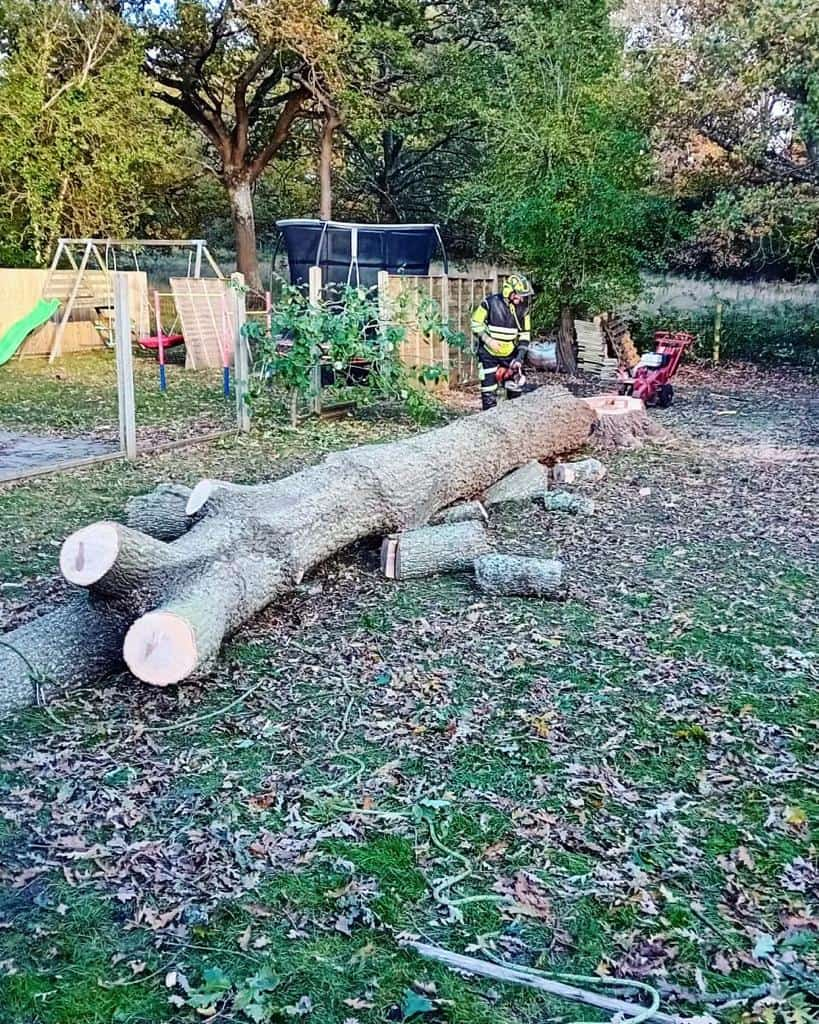
An old tree stump can restrict how a garden is used. It may interrupt a lawn, occupy valuable planting space or make it difficult to create a clear route through the garden. Once the stump has been removed or ground below the surface, the area can be incorporated into a more practical garden layout.
Before deciding what to do with the space, it is important to understand how the stump was removed, the condition of the surrounding ground and whether large roots remain below the surface. Proper preparation helps ensure that the next feature is supported correctly.
How to Reuse the Space After Stump Removal
Stump grinding usually reduces the main stump and visible root flare into small wood fragments. The remaining hole can then be cleared and prepared for its intended use. The following ideas demonstrate how this previously restricted area could become useful again.
1. Restore the Area as Part of the Lawn
Removing a stump can make an uneven lawn feel more open and easier to maintain. However, turf should not simply be laid over loose grinding material.
Excess wood chippings need to be removed because they gradually decompose and can cause the soil level to sink. The hole should be filled with suitable soil, compacted carefully and allowed to settle where necessary. The area can then be levelled and seeded or turfed to blend with the surrounding lawn.
Monitoring the repaired section over time allows any minor settlement to be corrected before it becomes noticeably uneven.
2. Create a New Flower Bed
The cleared space may be suitable for a flower bed, particularly if removing the tree has allowed more sunlight to reach the area. A combination of shrubs, flowering plants and seasonal planting can help integrate the space into the rest of the garden.
The soil should first be checked and improved where required. Remaining woody material can temporarily affect local soil conditions as it decomposes, so it may need to be removed or mixed with suitable fresh soil.
Plant selection should reflect the amount of sunlight, drainage and space now available rather than assuming that conditions have remained the same since the tree was removed.
3. Extend a Patio or Seating Area
A stump close to an existing patio may prevent the space from being widened or reshaped. Once it has been dealt with, the area could be used to create additional room for seating, outdoor dining or easier movement around the garden.
The ground needs thorough preparation before any hard surface is installed. Loose chippings, soft soil and decaying roots do not provide a dependable foundation and may lead to sinking or movement.
If a patio is planned, the depth of the stump grinding and the extent of the remaining root system should be considered as part of the groundwork.
4. Install a Garden Path
Removing a stump can open a more direct route between different parts of the garden. A new path can improve access to lawns, sheds, seating areas and planting beds while giving the overall layout greater structure.
The route should be planned around natural movement through the garden rather than simply following the former stump position. The ground must also be stable, level and capable of supporting the chosen surface.
Where large roots remain, the path design and foundation may need to be adjusted to reduce the risk of later settlement.
5. Introduce a New Garden Feature
The reclaimed space could accommodate a bench, raised planter, decorative container or another modest garden feature. This can be particularly effective where the old tree previously served as a focal point.
Any feature should suit the available space and surrounding ground conditions. Heavy items require a firm, level base, while planters need suitable light and drainage.
Keeping the feature proportionate helps the area feel connected to the wider garden rather than overcrowded.
6. Prepare for New Planting
A tree stump may be removed because the original tree was unsuitable, unhealthy or positioned poorly. If new planting is desired, the replacement should be selected carefully.
Planting another tree in exactly the same position is not always advisable. Remaining roots, compacted ground and depleted soil can make establishment more difficult. Positioning a new tree slightly away from the old stump may provide better growing conditions.
The mature height, canopy spread and root behaviour of the replacement should also be considered so that it remains suitable for the garden over time.
Why Proper Stump Removal Matters
Cutting a stump close to ground level does not provide the same result as grinding or removing it. The remaining wood can still obstruct excavation, interfere with mowing and limit future planting or landscaping.
Professional stump grinding can reduce the stump to an appropriate depth while limiting unnecessary disturbance to the surrounding garden. The required depth will depend on what is planned afterwards. Preparing for a lawn may differ from preparing for a path, patio or substantial feature.
Sharing your intended use with the tree surgeon before work begins allows the stump-grinding approach to be planned accordingly.
What to Consider Before Reusing the Area
Before beginning the next stage, assess:
- How deeply the stump has been ground
- Whether large surface roots remain
- How much loose wood material is present
- Whether the ground has started to settle
- The drainage and sunlight available
- The foundation required for the proposed feature
- Whether nearby plants were affected by the original tree
- How the new area will connect with the rest of the garden
This preparation reduces the likelihood of uneven ground, poor plant growth or movement beneath a new surface.
Conclusion
Removing an unwanted stump can create useful opportunities within a garden. The space may become part of a lawn, planting bed, patio, path, garden feature or carefully planned new planting area. The best option depends on how thoroughly the stump has been dealt with and how the surrounding ground is prepared.
Elsenham Tree Surgeons provides professional stump grinding in Elsenham, Essex, with the intended future use of the area taken into account. If an old stump is limiting your garden, contact the team to arrange an assessment.
Call us on: 01279 594 795
Click here to find out more about Elsenham Tree Surgeons
Click here to complete our contact form and see how we can help with your tree care needs.